


The Invisible Illness
With the help of modern medical technology, doctors now can easily diagnose a particular physical condition. However, diagnosing mental disorders is harder and only partially evaluated. As a result, the PHQ-9 and PHQ-2, components of the longer Patient Health Questionnaire, offer psychologists concise, self-administered tools for assessing depression.
More Than Feeling Sad
We need to know that depression is very different from a bad day with a “blue mood”. The illness directly affects certain areas of the brain and alters communication between nerve cells or nerve circuits which regulate emotions and behaviors. As a result, its patients often suffer from an unshakable feeling of worthlessness and guilt, in addition to experiencing low mood and lack of interest in daily activities. Also, some studies show that depression is associated with physical health problems, including eating and sleeping disorders
When Warning Signs Appear
To others, some symptoms may be easy to realise. Patients often appear unusually slow, agitated, restless or short-tempered. If these situations become more severe, they can lead to hopelessness, self-destructive behaviors, or thoughts of death and suicide.
A Tool for Detecting Depression
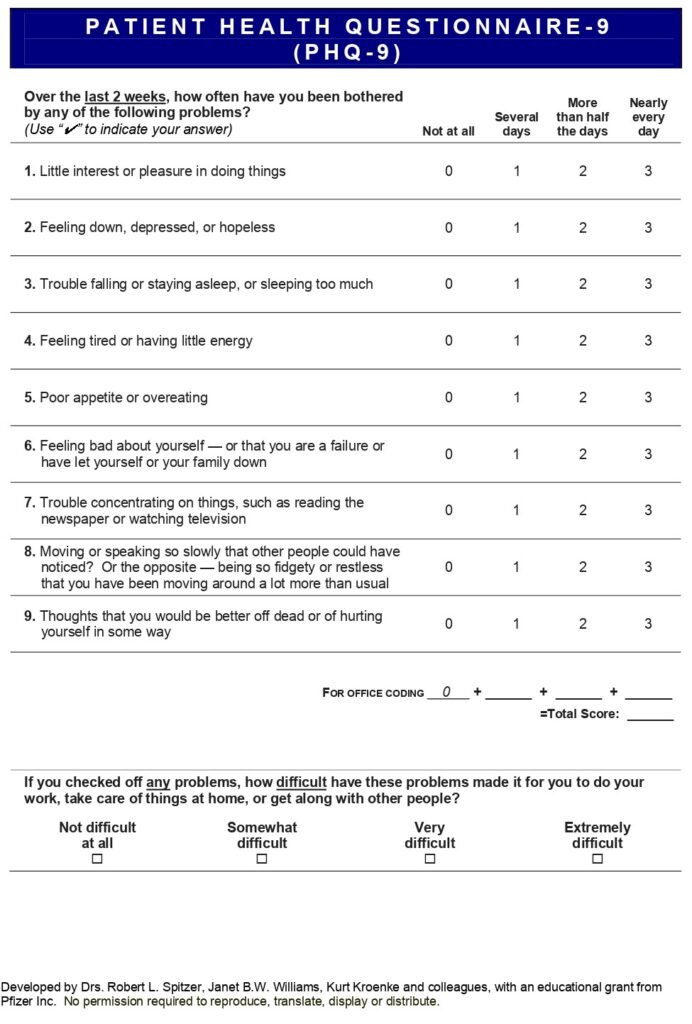
Despite these visible warning signs, people find it hard to determine when depression begins to affect a person . Since its publication in 2001, the PHQ – 9 (Patient Health – Questionaire) has become a widely used instrument for assessing depression in individuals aged 12 and older. Initially, with the assistance from medical staff, patients have to complete PHQ-2, which consists of the first 2 items of the PHQ-9 and serves as a preliminary screening tool. If the results suggest possible depression, patients are then asked to complete the full PHQ-9 assessment.
How the PHQ-9 Works
Through 9 questions related to feelings in the last two weeks accompany the points-based system, the severity will be sorted out depending on the resulting point:

Great content! Keep up the good work!